

















-
AllAnytime Fitness Gym Art Blog Bus Fares Bus Service Business Business Expo C2C Care Care Home Charity Children Christmas Cinema City Status Cliffs Pavilion Cliffs Pavilion Review College Community Competition Construction Coronation Coronavirus Design Easter Education Electoral changes Leigh on sea Employment Emsella Chair Environment Essex & Suffolk Water News Essex Police Essex Wildlife Trust News Events Family Fun Fashion Festival Film Finance Fitness Food Food & Drink Foulness Bike Ride Fresh Face Pillow Company Gardening General Election Hair & Beauty Halloween Harp Havens Havens Hospice Havens Hospices Havens Hospices Health & Fitness Health & Beauty Health & Fitness Healthwatch Southend Historicaleigh History Holidays Housing Indian Indirock Jubilee Karen Harvey Conran Kids Kids Competitions Lazydays Festival Legal Leigh Art Trail Leigh Folk Festival Leigh Library Leigh Road Leigh Town Council Leigh Town Council Press Release Leigh on Sea Leigh on sea Folk Festival Leigh on sea Marathon Leigh on sea Town Council Leigh on sea man breaks marathon record Leigh on sea news Lifestyle Livewell Southend Press Release LoS Shop London Southend Airport Los Shop Marathon Mortgage Angel blog Mortgages Mughal Dynasty Music My Mortgage Angel MyLoS NHS News News Offers Palace Theatre Parenting Parking Pets Picture Of The Week Pier Politics Press Release Press Release Southend City Council Professional Property Property Of The Week RSPCA Ray Morgan Re:loved Recipes Recycling Restaurant Restaurant Review Restaurants Review Roads Rotary Club Royal Hotel Royal Visit SAVS Schools Seafront Shopping Shows & Music Review Shows & Music Shows & Music Review Southend Southend Airport Southend Borough Council Press Release Southend City Bid News Southend City Council Southend City Council Press Release Southend City Council Press Release Southend Community Safety Southend Hospital News Southend In Sight Southend In Sight Southend In Sight Press Release Southend on Sea Sport The One Love Project The Ship Hotel Theatre Theatre Blog Theatre Review Theatre review Transport Travel Travel Veolia Volunteer Weddings Whats On c2c
Coppicing and beyond: How Southend’s Tree Wardens are reviving our woodlands
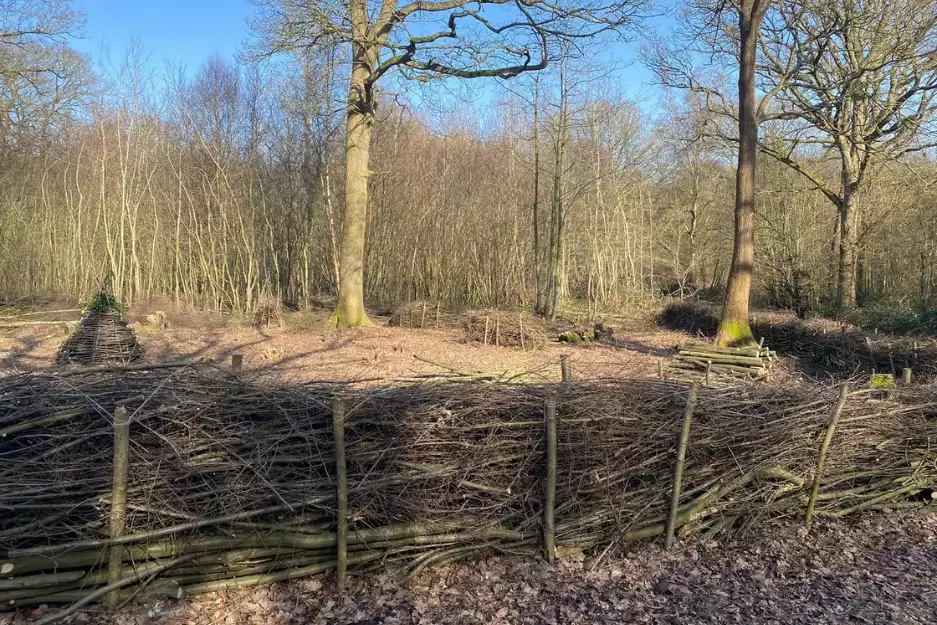
Ever heard the term “coppicing”? Over the winter, Southend’s dedicated Tree Wardens have been busy carrying out this Stone Age woodland practice in a small area, known as a “coupe,” within the serene Hadleigh Great Wood.
This traditional practice involves cutting certain trees just above ground level to encourage fresh, vigorous growth. Species such as oak, ash, hazel and hornbeam naturally regenerate, producing multiple stems from the base. These “stools” are then re-coppiced on a 10 to 30 year cycle, creating a sustainable supply of timber while bringing enormous ecological benefits.
Positive practice, longer life
It might feel counterintuitive to cut trees back to stumps, but coppicing is one of the best things we can do for their long-term health.
Believe it or not, by regularly coppicing trees, we can extend their natural lifespan by up to four times. Some of the oldest coppice stools in Southend’s woodlands are thought to be more than 300 years old; living history that continues to regenerate thanks to this traditional practice.
New life emerges
And then there’s biodiversity. When a coupe is cut, sunlight can finally reach the woodland floor, creating the perfect environment for wildflowers and undergrowth to flourish and the results can be seen for years to come.
This burst of new plant life provides food and shelter for a huge range of insects, birds and mammals, including:
- the rare and threatened Heath Fritillary butterfly
- the charming Hazel Dormouse
- the majestic Tawny Owls
- the active little Treecreeper birds
This work supports the Council’s wider commitment to enhancing and protecting Southend’s natural environment under our ‘Safe, Clean and Green’ priority. The Corporate Plan 2024–2028 sets out a clear ambition to “enhance the environment, biodiversity and our coastline” and to upgrade parks and green spaces as part of improving the city’s overall environmental quality.
Nothing goes to waste
Every piece of timber removed from the coupe is reused on site through a traditional craft known as “dead hedging.” The cut wood is carefully stacked into a natural fence that:
- protects the newly opened woodland floor
- prevents trampling
- shelters key wildflowers such as bluebells and cow parsley
- locks up carbon
- creates valuable habitats for small mammals, birds and insects
In our opinion, it also looks beautifully rustic; a feature that blends seamlessly into the woodland landscape while quietly doing important work.
Signs of spring
During the team’s most recent visit, two lovely butterflies, a Brimstone and a Peacock, fluttered in, signalling the arrival of spring and the success of the work. If anything, this is Mother Nature’s way of telling us to turn off Netflix and turn to the wild instead.
Walk with us in the woods
This spring, Southend’s Tree Wardens are hosting “Rackham Revisited,” a wonderful series of guided walks exploring the ancient woodlands of South-East Essex. Walks take place across several beautiful sites, and each session offers a gentle 2 to 3-hour wander led by knowledgeable volunteers.
All walks are free of charge, with optional donations to the Woodland Trust and Ancient Tree Forum welcome. Up to 25 people can join each walk, and they are suitable for all ages.
Upcoming walk dates
- Wednesday 15 April: Oakwood Park
- Sunday 19 April: West Wood
- Thursday 23 April: Hadleigh Great Wood
- Tuesday 5 May: Belfairs Park
- Sunday 10 May: Edwards Hall Park
- Friday 15 May: Hadleigh Great Wood
- Saturday 16 May: Oakwood Park
- Thursday 4 June: Edwards Hall Park
- Saturday 6 June: Belfairs Park
- Tuesday 16 June: West Wood
- Friday 26 June: Belfairs Park
- Saturday 4 July: West Wood
To book your place or find out more, or if you would like to get involved in the Tree Wardens’ work, please email treewardens@southend.gov.uk
ADD A COMMENT
Note: If comment section is not showing please log in to Facebook in another browser tab and refresh.